The Global Observation Research Initiative in Alpine Environments (GLORIA) is a worldwide network of long-term research sites established to assess the impacts of climate change in sensitive native alpine communities. There are more than 60 GLORIA target regions in mountain ranges worldwide, including several relatively new regions in North America.
Many alpine species face habitat fragmentation and loss, and even extinction because they are adapted to cold temperatures and very limited in their geographic distribution. Alpine communities are also limited to the extent that they can migrate to higher altitudes or latitudes due to the island nature of mountain tops. Upward movement of alpine flora with recent warming has already been observed in the European Alps and climate change models predict more rapid and larger climate change at high elevations.
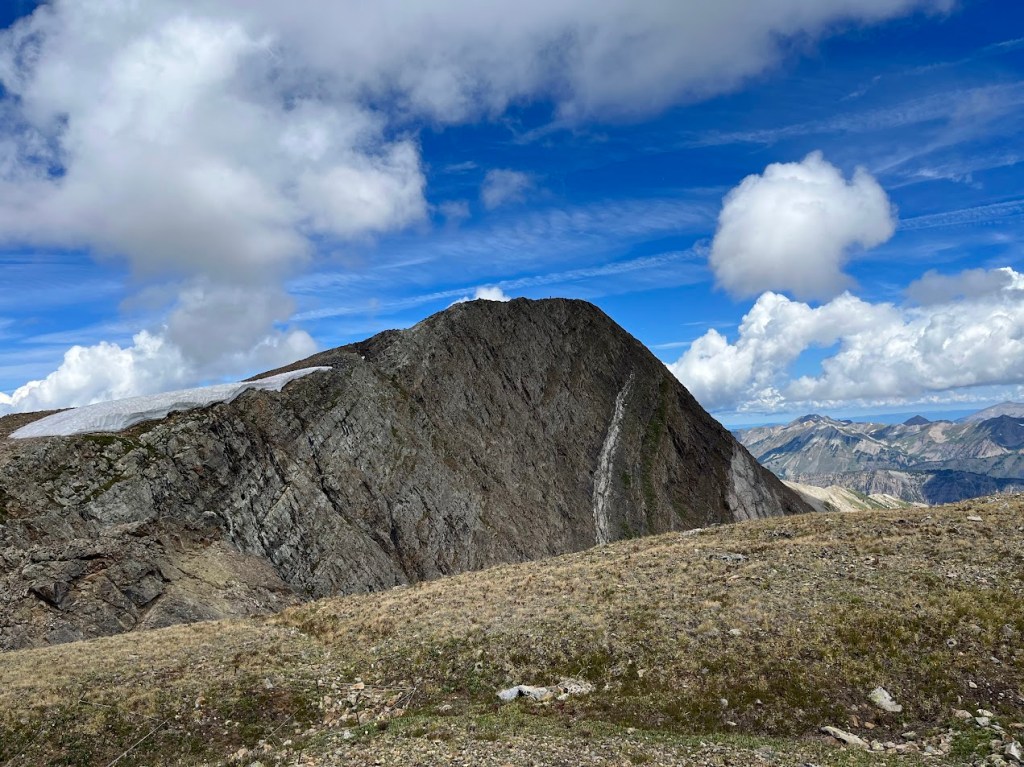
Why Rocky Mountain Biological Laboratory?
The Colorado Rocky Mountains provide an excellent setting to assess the impacts of climate change-induced biodiversity and habitat losses in alpine environments.
The planned installation and implementation of a GLORIA target region in summer 2008 at Rocky Mountain Biological Laboratory (RMBL) will strengthen the existing network of sites that form latitudinal and elevation gradients within the US and throughout the world.
These sites include the GLORIA master site based at White Mountain Research Station in the White Mountains of California and sites in California’s Sierra Nevada and the northern and southern U.S. Rocky Mountains.
The sites at RMBL lie along a latitudinal gradient within the Rockies that range from Glacier National Park in Montana south to Silverton in southern Colorado and fill an important ecological and latitudinal gap in our current understanding the effects of climate change in alpine environments.
GLORIA Sites At RMBL

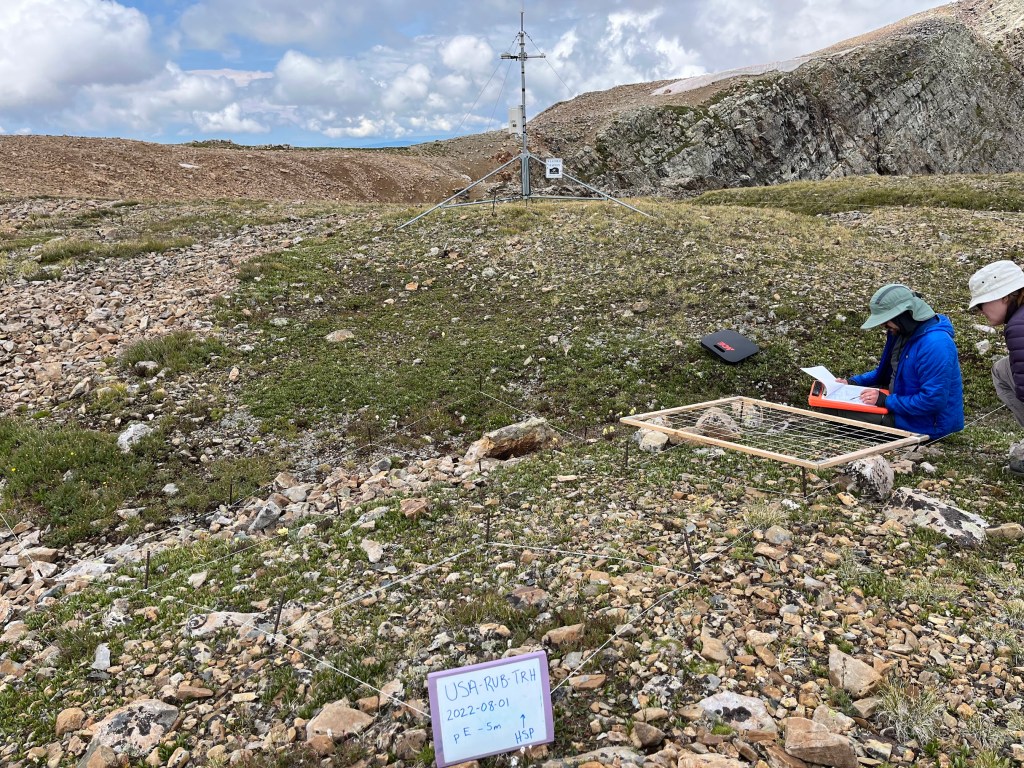
(13300′, 4053 m)
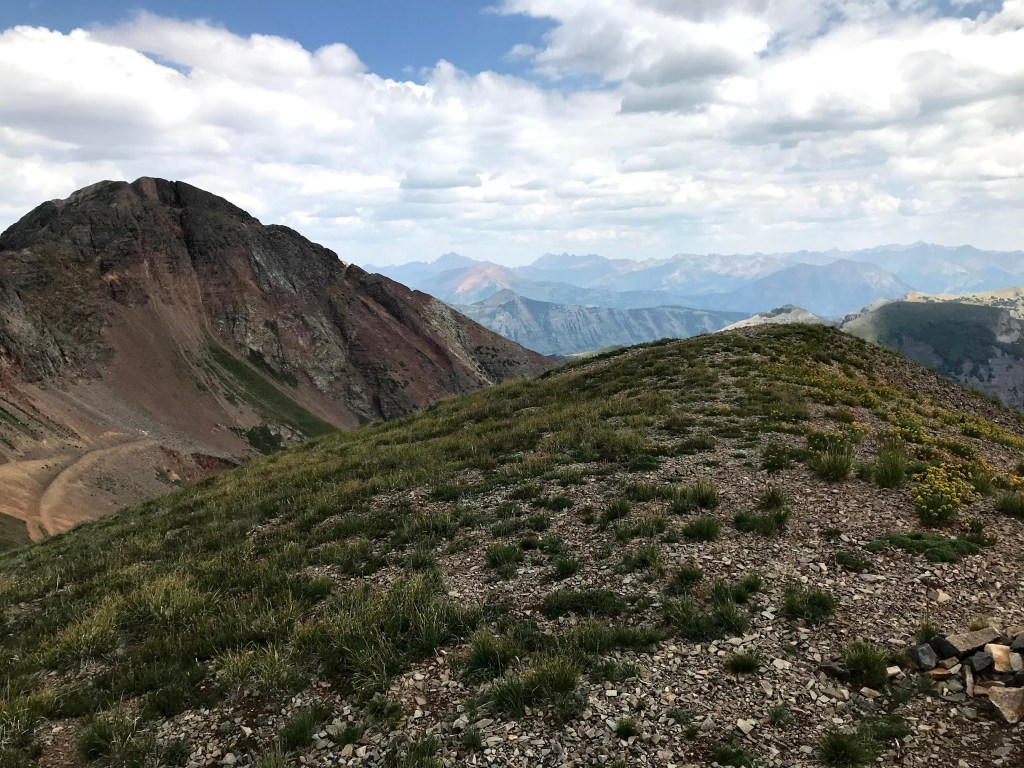
(12600′, 3840 m)
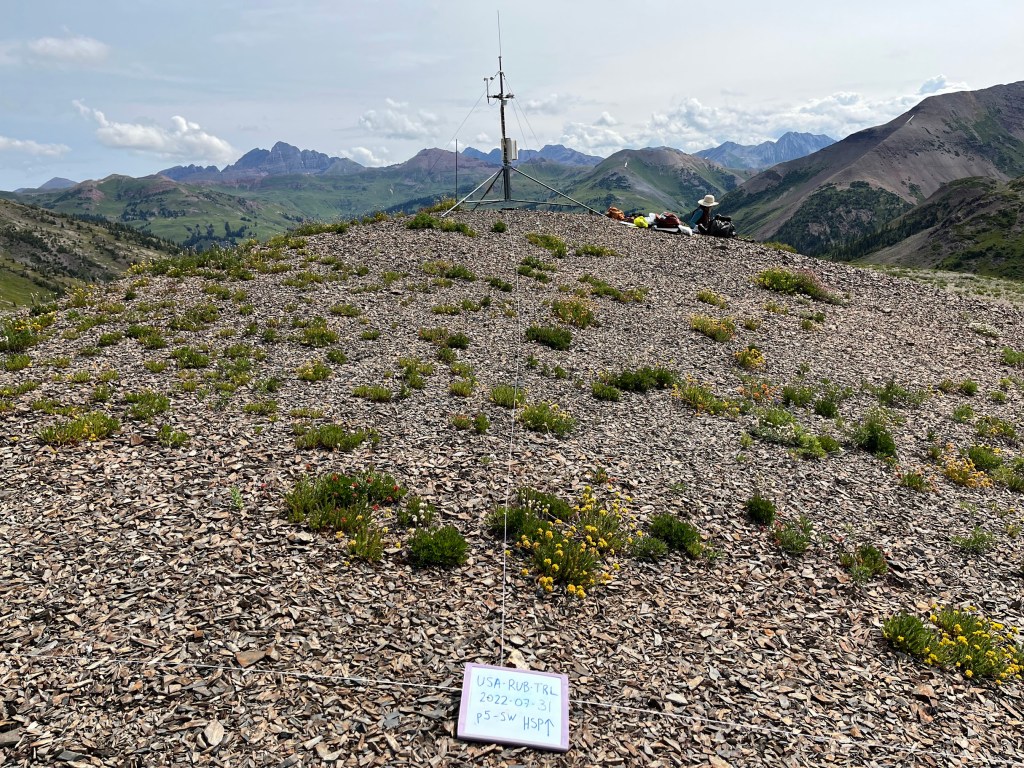
(11900′, 3627 m)
What Methods Are Used For GLORIA?
GLORIA uses a multi-summit approach and standardized methods that allow for comparisons among sites. The use of simple methods and low maintenance costs of the permanent plots underpin a durable long-term operation.
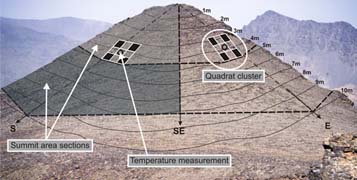
The sampling design is focused on the fundamental climatic gradients (altitude, aspect, and latitude) and thus will be effective in assessing the current and future large-scale patterns of plant diversity of the world’s mountains.
On each summit, habitat characteristics, species composition, species cover, and frequency counts are recorded in sixteen, 1m x 1m quadrats. Additional surveys on the percentage cover of surface types and percentage cover of each species in eight additional plots extending to 10m below the summit focus on detecting changes in species richness and species migrations for a total of 96 plots.
Temperature loggers buried 10cm below the soil surface are used to record soil temperature and identify the date of snowmelt. A complete description of methods to be used can be viewed on the international GLORIA website.
Why Is GLORIA Important?
The GLORIA research at RMBL will contribute to a predictive understanding of shifts in the distributions of alpine species with climate warming in the Rocky Mountains and Western U.S.
Results from this work will also expand existing long-term data sets on the effects of climate change in alpine environments; provide standardized, quantitative data on the altitudinal differences in species richness, species compositions, vegetation cover, soil temperature, and snow cover period.
We can establish a baseline for treeline migrations observations and help to identify alpine species at risk of extinction from changing climate.
Our research will also result in information on long-term species persistence and turn-over rates and provide educational and research opportunities for community members, students, and other scientists.
Partners
Kathy Darrow, Meredith Jabis, Daniel Winkler, and others have helped with sampling over the years.
Ramona Butz led and David Inouye, Ian Billick, Abraham Miller-Rushing, Paula Lehr, Diane Campbell, Sara Baguskas, and Chris Still supported the establishment of the sites.
Theses
Jabis, M. D. 2018. Climate Change Impacts in Alpine Plant Communities. PhD Dissertation, Environmental Science, Policy and Management, University of California, Berkeley. ProQuest ID: Jabis_berkeley_0028E_18505. Merritt ID: ark:/13030/m5qz78pg. https://escholarship.org/uc/item/8fm236rz
 Kueppers Lab Group